
Spring & Balance Problems
Garage door springs eventually reach the end of their useful cycle life and can leave the door heavy, uneven, or unable to move normally.
Local garage door service · Baltimore, MD
Garage door repair and installation across Baltimore, covering cable repair, opener repair, panel and roller replacement, and maintenance for older homes.

Garage door services
From cable repair and installation to maintenance, opener repair, panel replacement, roller replacement, and general garage door service, the lineup is built around the older and mixed-generation systems common across Baltimore.


Common Baltimore garage door problems
Spring wear, cable damage, seized rollers, aging openers, track problems, and mismatched replacement hardware make up much of the work across Baltimore's older housing stock. The area's homes were built mainly between 1955 and 2014, with a median build year around 1978 and substantial 1960s- and 70s-era housing; many garages have already been updated at least once, leaving newer doors or panels operating on older spring, track, cable, or opener configurations. Both extension-spring systems on detached garages and torsion systems on other older residential setups show up here; rollers seize, cables fray near the drum, and aging opener electronics become difficult to repair when original components are no longer readily available. The correct repair depends on inspecting the whole system rather than assuming one noisy, slow, or crooked symptom points to only one failed part.
Garage door springs eventually reach the end of their useful cycle life and can leave the door heavy, uneven, or unable to move normally.
Cables can fray near drums, loosen, slip, or fail after years of carrying repeated lifting loads.
Older rollers can seize, crack, become noisy, or create added resistance during door travel.
Older opener motors, gears, controls, and circuit boards can develop problems, and some discontinued electronics may take longer to source.
A newer door or panel operating on older tracks or spring hardware can create balance, alignment, and reliability problems.
Clear repair guidance
There isn't one flat repair price, because spring work, opener repair, cable repair, panel replacement, track work, maintenance, and installation can involve different parts and labor.
Spring size, door weight, opener age, track condition, roller wear, cable condition, and parts availability can all change the scope.
Older opener components and other discontinued hardware may require additional sourcing instead of an immediate repair.
We inspect the actual door, identify what is failing, and present options before work begins.
When several major components are deteriorating together, replacement can be more practical than repeatedly repairing an aging system piece by piece.
Local housing matters
The broader source service area includes roughly 489,099 households and about 177,541 owner-occupied houses, with a median household income around $109,661.
Housing spans roughly 1955 through 2014, with substantial 1960s- and 70s-era construction and a median build year around 1978.
That creates a mix of extension-spring doors, torsion systems, older tracks, replacement openers, insulated doors, chain-drive units, belt-drive replacements, and several generations of repair work.
Older homes may have garage openings and hardware that have been updated in stages rather than replaced as one complete system.
The house's build era provides useful context, but the correct repair depends on the actual door and hardware installed today.

Cold-weather garage door wear
Baltimore sits in a cold, severe winter climate zone, so colder seasonal operation tends to expose existing spring fatigue, roller resistance, weather-seal deterioration, track problems, and opener load rather than temperature alone causing failure.
Cold-weather operation can expose weakness in a spring that is already approaching the end of its useful cycle life.
Worn rollers or marginal track alignment can become more noticeable when an older door is already moving with added resistance.
Older bottom seals and weatherstripping can harden, crack, or lose contact over time, allowing more air movement around the closed door.
An opener can work harder when spring, cable, roller, track, or balance problems are already making the door difficult to move.
What to expect
We start with what the door is actually doing, use the symptoms to point toward the likely cause, inspect the whole system, and explain the options when older components need sourcing.
Tell us whether the door will not open, opens crooked, made a loud bang, or the opener runs without moving the door.
The symptoms can help point toward the spring, cable, opener, rollers, tracks, or another operating component before the visit.
We check the entire garage door system because one failed component can be connected to another aging or mismatched part.
If a targeted repair makes sense, it stays targeted. If several major components are failing together, replacement can be discussed instead.
Older Parts Can Take Longer
Some older opener components and legacy hardware may not be readily available and can require additional sourcing time.
Repair or replace?
A broken cable, roller, spring, opener component, or isolated track problem doesn't automatically mean the entire garage door needs replacement. Replacement becomes more practical when several major components are deteriorating together.
A targeted repair can make sense when the panels, tracks, opener, springs, cables, and surrounding structure remain serviceable.
An older garage door can remain worth keeping when its structure is sound and the immediate failure is isolated.
Replacement becomes more practical when the opener, tracks, rollers, springs, or other major components all need substantial work at the same time.
If critical older components are no longer reasonably available, broader replacement can offer better long-term value than repeated patch work.
Mid-century to modern garage door systems
Baltimore's broad housing range means garages can combine extension springs, torsion systems, older tracks, replacement openers, newer insulated doors, and several generations of hardware.
Both extension-spring and torsion-spring setups appear across the broader Baltimore housing stock.
A heavier replacement or insulated door can place different demands on springs originally sized for a lighter panel.
A garage may have a newer opener or door while retaining older tracks, springs, rollers, cables, or mounting hardware.
Openers installed in earlier decades can use circuit boards and logic components that become harder to source as models age.
Built around Baltimore garage doors
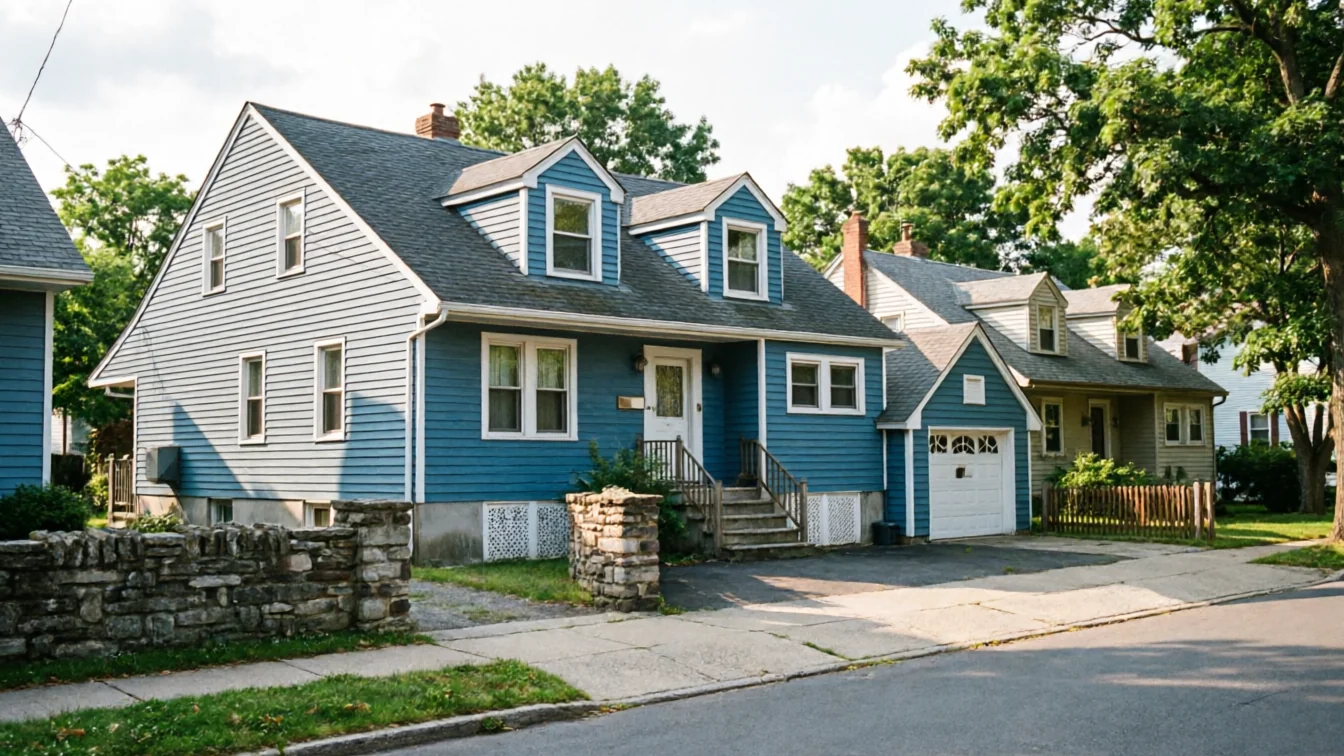
Baltimore's housing has been through several generations of garage door upgrades, so the visible door, spring system, opener, and tracks may all be from different eras.
Spring size, door weight, cable condition, roller type, track alignment, and opener hardware should be checked directly.
A newer door or opener may have been installed while older tracks, springs, or related hardware remained in place.
If the panels, tracks, and supporting hardware remain sound and one component is the actual failure, complete replacement is not automatically necessary.
When obsolete hardware, multiple failures, or structural deterioration make repair poor value, replacement can be the more practical path.
Service areas
Questions
Baltimore's winters fall in a cold, severe climate band, and steel springs get more brittle as temperatures drop. A spring near the end of its cycle life that would hold on in October often snaps on a cold January morning when the metal is stiffer and the overnight temperature swing adds extra stress to a part that was already close to failing.
Likely. Most of the housing in this area was built between 1955 and 2014, with a lot of it dating to the 1960s and 70s. Openers from that era, or even replacements installed decades later, are now old enough that circuit boards and logic parts can be hard to source quickly, which is often why a repair takes a short wait instead of a same-day fix.
Yes. We run jobs out to about a ten-mile ring from our base near Downtown and the Inner Harbor, covering areas including Towson, Catonsville, Dundalk, Glen Burnie, Essex, Pikesville, and Randallstown, along with the closer-in neighborhoods on both sides of the harbor.
Sometimes, yes. If a door has a dead opener, a bent track, and worn rollers all at once, especially on an older door, the repair bill can get close to what a new door costs. We'll tell you plainly when that's the case instead of patching a door that's going to keep failing.
Ready when you are
Tell us what the door is doing and we'll help you figure out whether you're dealing with a cable, spring, roller, opener, panel, track, maintenance, or installation issue.